


Photo Credit: The House of Gallagher
MATTHEW CELESTIAL
Before I understood fashion as an industry, I viewed it as a world of access.
Who gets in. Who doesn’t. Who gets talked about — and who doesn’t.
Back when Toronto Fashion Week existed at the David Pecaut Square and it felt like a closed room you had to find your way into. Matthew Gallagher was one of those names. As a young publicist then, I tried to sneak in. His shows made me curious enough to stand outside and hope I could get inside. Truthfully, I never made it into one of his shows. But I remember the feeling of orbiting it.
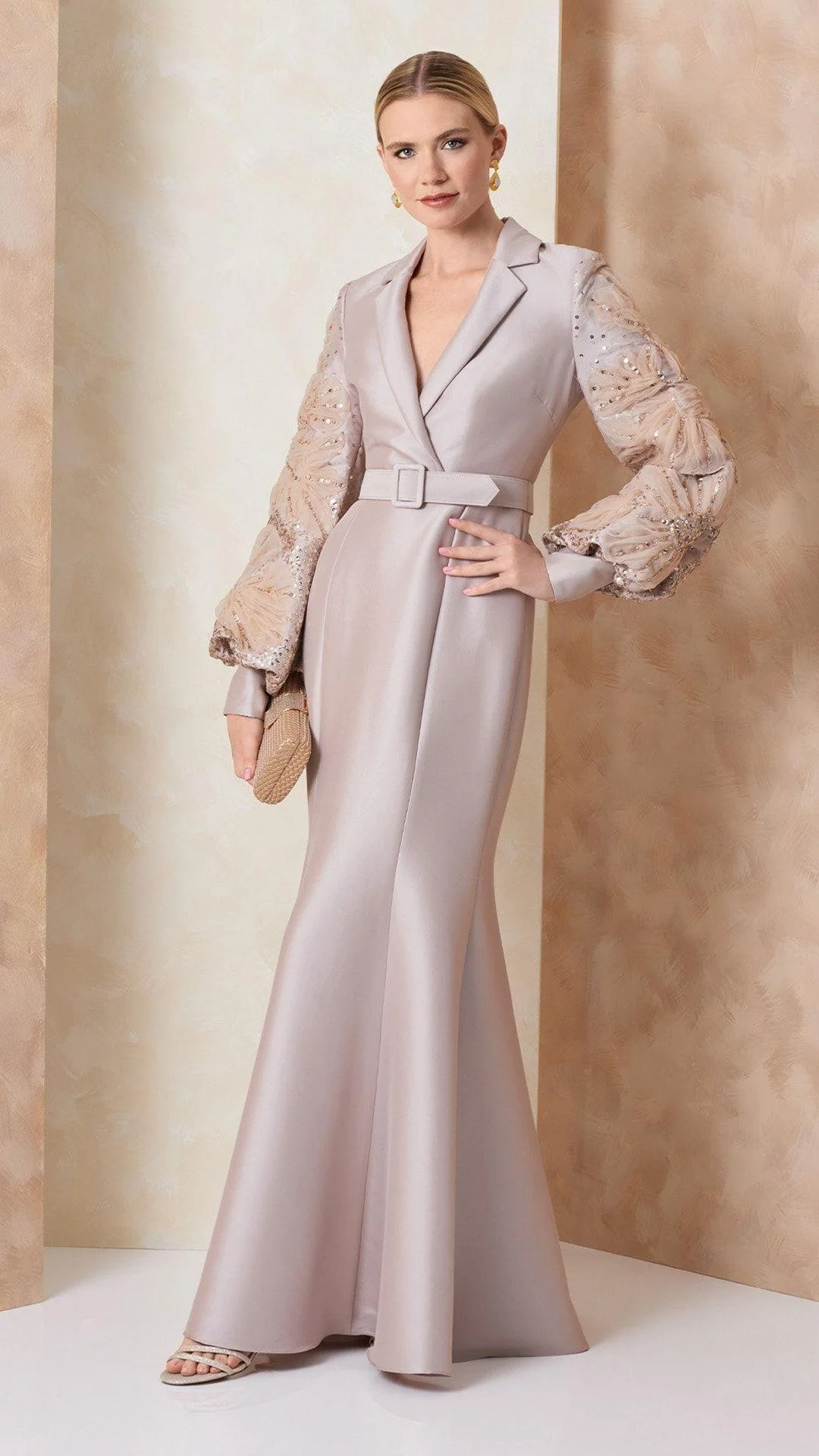
Photo Credit: The House of Gallagher
And looking back, that distance feels accurate. Because Gallagher’s work has never been about immediate access. I’ve always appreciated his creative direction and vision as a designer. In every interview, he would invite you into his own world.
Matthew Gallagher’s path doesn’t follow the usual Canadian arc.
Born in Nova Scotia and trained in Milan at the Istituto Europeo di Design, his work is shaped by contrast. It’s this feeling of Canadian restraint with European discipline. He shows it in the construction. In the editing. In the refusal to overwork an idea. When he emerged in Toronto, he did what promising designers are expected to do: show, build, gain recognition. Early accolades, industry validation, momentum.
But even then, there was something slightly out of sync — in a good way. While others were chasing visibility, Gallagher was building a language. And that language building has made so many fall in love with him that even as we remember the Toronto Fashion Week hay days, he is one of the original Canadian fashion designers that we deem as one of our national treasures.
But as Toronto Fashion Week disappeared, our industry became a mysterious cloud again. That access became unclear. I often wondered what he had been up to, only for me to discover that he stepped away.
In fashion, stepping back is often misread as losing relevance. Momentum is treated like something you have to hold onto at all costs, even if it means compromising the work. Gallagher didn’t do that. He chose alignment over output. And that decision quietly reshaped everything that followed.
House of Gallagher Feels Like a Correction
What exists now under House of Gallagher doesn’t feel like a comeback.
It feels like a correction. The model is deliberate: it’s made-to-order, handcrafted in Canada and resistant to overproduction
But more importantly, the philosophy is visible in the garments themselves.
There’s a controlled nostalgia to the work — historical references that have been softened, edited and restructured into something modern. Clean silhouettes. Thoughtful proportions. Nothing excessive, nothing unresolved. Gallagher describes it as a balance between new world modernity and old world decadence. In practice, it reads as something simpler:
Clothing that isn’t trying to convince you.
Timelessness Is Overused. Here, It’s Earned.
“Timeless” gets thrown around in fashion to the point of meaning very little.
It’s often used to justify minimalism, or to make something feel more permanent than it actually is.
But in Gallagher’s work, it lands differently. Because the pieces aren’t reacting to the current moment. They’re intentionally detached from it. There’s no urgency in the construction. No signal chasing. No visible attempt to insert the work into trend cycles that will collapse in a matter of weeks. And I always like to say that restraint, that refusal, is what gives the work weight.
The Industry Is Finally Catching Up to His Pace
For a long time, slower fashion lived on the outside. Respected, but not centred.
Now, the conversation has shifted. There’s growing fatigue around overproduction, burnout and the speed at which fashion consumes itself. Designers are being asked to produce less, think more and build with intention. Gallagher didn’t pivot into that shift. He was already there. Which makes his work feel less like a reaction… and more like a blueprint.

Photo Credit: The House of Gallagher
The Canadian Gap Is Still There
And yet, despite all of this, the visibility doesn’t quite match the level of work.
That’s not a reflection of the designer. It’s a reflection of the system. Canada has designers who are globally trained, technically rigorous and creatively clear. What it hasn’t fully built is a structure that consistently amplifies them in a way that feels proportional.
So the work circulates quietly. Recognized by those paying attention. Missed by everyone else.
Because Not Everything Needs to Be Loud to Matter
There’s a tendency, especially now, to equate visibility with value. To assume that if something isn’t everywhere, it isn’t working. Gallagher’s work challenges that idea. It suggests that relevance can be built differently. Through consistency. Through clarity. Through a point of view that doesn’t shift just to keep up. But it also exposes something larger. When work like this exists without matching cultural recognition, it raises a question that goes beyond any one designer.
So here’s the question… If Matthew Gallagher has been producing this level of work, consistently, intentionally and without compromise — are we overlooking him, or are we still underestimating what Canadian fashion is capable of recognizing?