

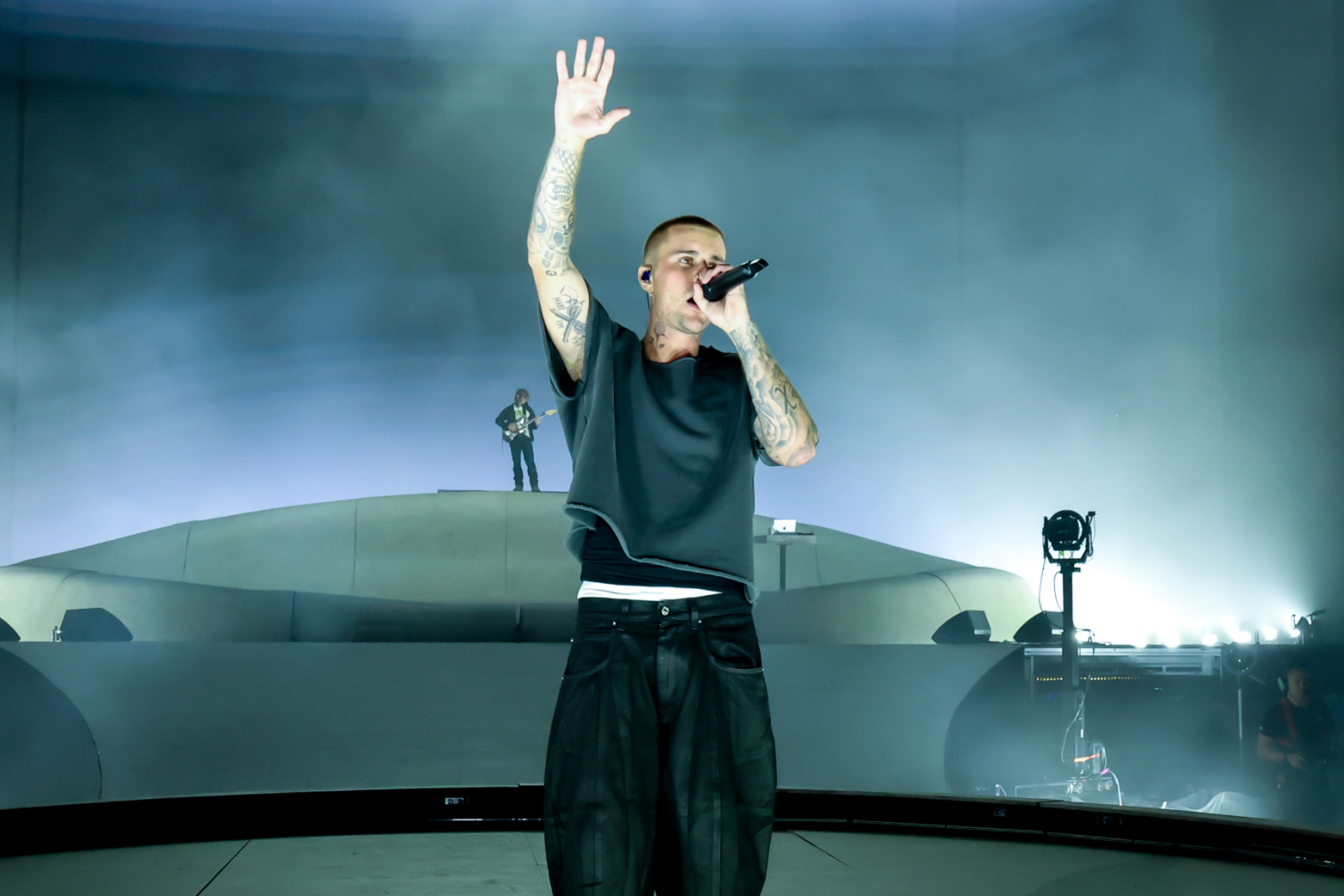
Photo Credit: Kevin Mazur / Getty Images for Coachella
STAFF
Justin Bieber has been through it. But this has never prevented him from continuing on. When an artist grows up with the world looking at them, it’s so easy to criticize them and await for their downfall. But what we forget is that we, too, are growing up with them. There comes a point, when you see an artist, in their own skin, captivate the hearts of so many. We saw this at Coachella.
It’s easy to see the attention engineered at these festivals.
Surprise sets. Headline slots. Viral moments that peak and disappear within hours. Justin Bieber didn’t do any of that. He showed up. As per usual. And still managed to be the most talked-about presences of the weekend.
This is because we’ve finally listened to him.
ABSENCE, AS STRATEGY.
Contrary to his performances, earlier in his career, where he dominated the stage through spectacles, nowadays, he effortlessly shows up. He controls the crowd in choosing not to compete for attention in a space built entirely around it. At Coachella, Bieber didn’t need a stage to dominate the conversation.
He most certainly didn’t need a rollout, a teaser or a guest appearnace engineered for TikTok. He let proximity do the work. And in doing so, he reminded everyone of something the industry tends to forget: Not all influence needs to be activated. Some of it just needs to be felt.
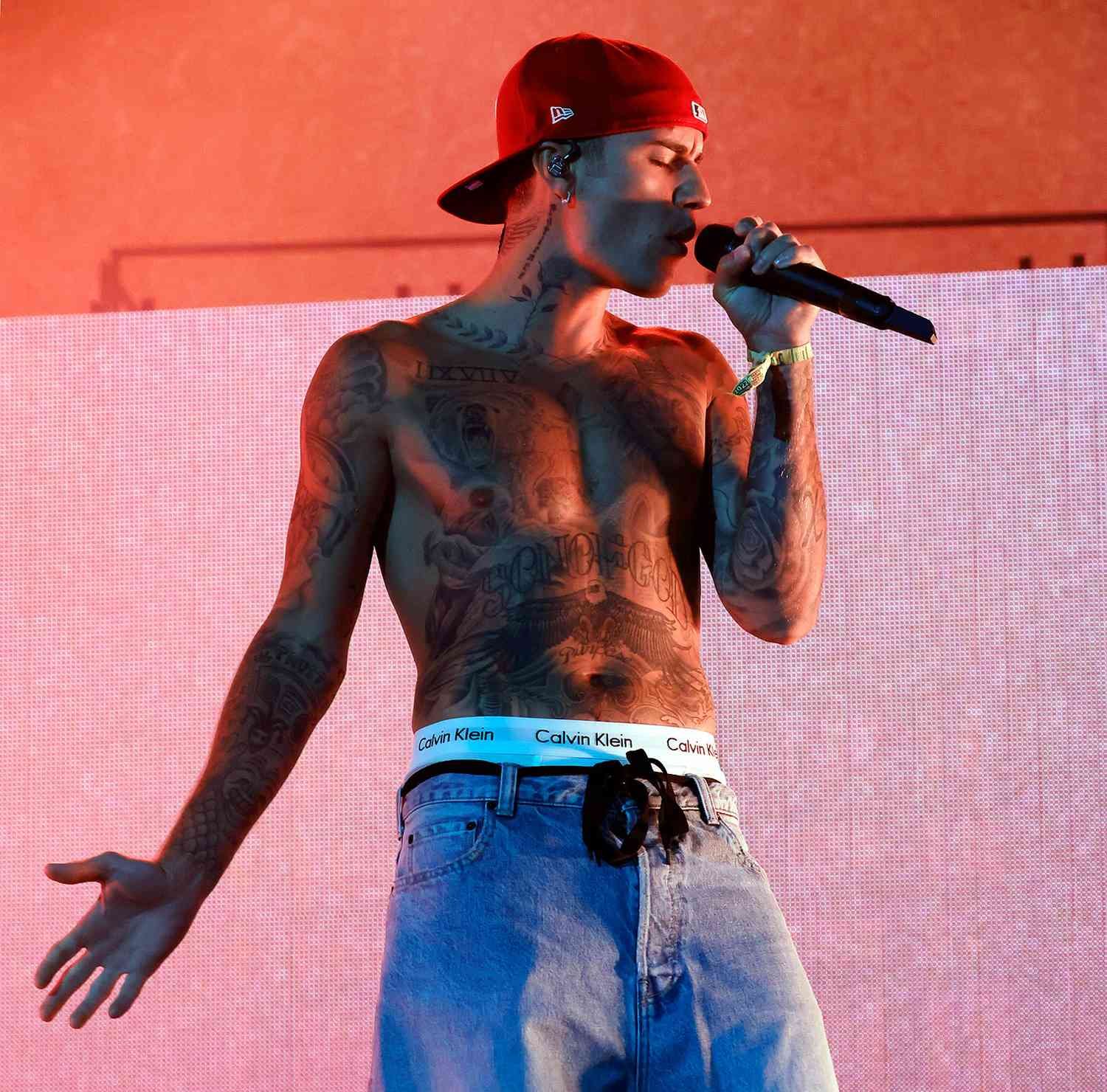
Credit : Kevin Winter/Getty
THE CATALOGUE IS CIRCULATING AGAIN. AND THIS TIME, IT’S EARNED.
What’s more interesting isn’t the sighting.
It’s what followed.
Streams are up. Clips are resurfacing. Entire eras are being re-evaluated, not ironically, not as nostalgia, but with a kind of clarity that wasn’t there the first time around. Sorry sounds tighter. What Do You Mean? feels more precise. Even Beauty and a Beat, once flattened into cultural shorthand, is being heard as what it actually was: a perfectly constructed pop record.
This isn’t a comeback cycle. It’s a recalibration. We’re now seeing an artist who has mastered feeling their own than a young pop star trying to win validation from the hearts of young teen fans.
WE DIDN’T MISS THE MUSIC. WE MISREAD THE MOMENT.
Bieber’s early career wasn’t subtle. It couldn’t be. He was scaled too quickly, scrutinized too publicly and consumed at a volume that made it difficult to separate the work from the noise around it. For a long time, the narrative outpaced the music. Now, with distance, that imbalance is correcting itself. And what’s left is harder to dismiss.
Most importantly, the fan base has expanded beyond the young pre-teen girls and into a wider demographic of people enjoying R&B and pop.
THIS VERSION OF BIEBER DOESN’T ASK FOR ATTENTION.
There’s a shift in how he occupies space now. Less output. Fewer declarations. No visible urgency to reassert relevance. And paradoxically, that restraint makes the presence land harder. Because in a culture that rewards constant visibility, choosing not to perform it reads as confidence.
Not manufactured. Not strategic in the traditional sense. Just… resolved.
Coachella didn’t reintroduce Justin Bieber. It reframed him. Not as a former teen idol. Not as a headline cycle. But as an artist whose work has outlasted the conditions it was first released into. That’s a different kind of longevity.
Do you think this will take him further into the next chapter of his career?